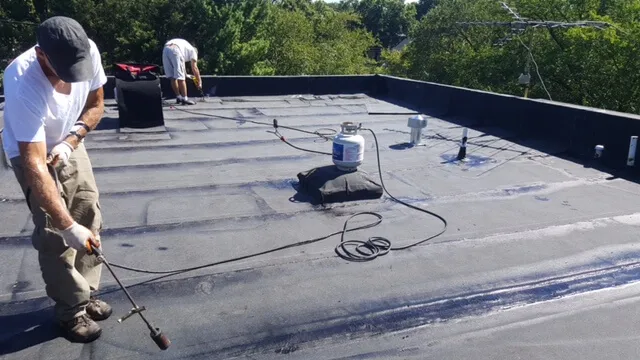
Flat roofs cover much of commercial Sioux Falls and many porches, additions and garages. They are not truly flat. They rely on a slight slope, sound seams and clear drains, and our winters test all three.
Price ranges on this page are national figures published by HomeGuide for 2026. They are not our quotes. Local labor, material prices, the pitch of the roof and what we find under the old shingles move the number up or down. Last checked October 2026.
What is the best material for a flat roof?
There is no single best flat roof material. It depends on the building. EPDM rubber stays flexible in deep cold and has a long record in northern climates. TPO and PVC have heat-welded seams and a white surface. Modified bitumen is tough under foot traffic. We look at the deck, the insulation, the drainage and how the roof is used, then recommend one.
| System | Installed cost per sq ft, national | Published lifespan |
|---|---|---|
| EPDM rubber | $3.50 to $10.00 | 15 to 25 years |
| TPO | $4.00 to $10.00 | 10 to 25 years |
| PVC | $5.00 to $12.00 | 20 to 30 years |
| Modified bitumen | $4.00 to $7.50 | 10 to 20 years |
| Built-up (tar and gravel) | $3.50 to $7.50 | 20 to 30 years |
TPO, EPDM or PVC: what is the difference?
TPO and PVC are plastic sheets with seams welded by hot air. EPDM is a rubber sheet with seams joined by tape or adhesive. EPDM is usually black, which helps melt snow and suits a heating climate. TPO and PVC are usually white and reflect summer heat. PVC resists grease and chemicals, so it is used over restaurants.
Why does water pond on my flat roof?
Water ponds where the roof has too little slope, a blocked drain or a low spot from settled insulation or a sagging deck. Water that is still there 48 hours after rain is a problem. In winter the pond freezes, and the ice works on seams and flashings. Fixes range from clearing drains to adding tapered insulation or another drain. HomeGuide lists $800 to $2,500 for sagging or pooling repairs nationally.
Can a flat roof be coated instead of replaced?
Yes, a flat roof can be coated instead of replaced when the membrane is still sound and the insulation under it is dry. A coating seals small cracks and reflects heat. It does not fix wet insulation, failed seams or bad drainage. Roof coating costs $1 to $4 per square foot nationally. Published lifespans are 10 to 15 years for silicone and 7 to 20 for acrylic. Coatings need warm, dry weather, so here they are a late spring to early fall job.
How long does a flat roof last?
A flat roof lasts 10 to 30 years by the published figures, depending on the system: EPDM 15 to 25 years, TPO 10 to 25, PVC 20 to 30, modified bitumen 10 to 20 and built-up roofing 20 to 30. Drainage and upkeep decide which end of the range you get.
There are bubbles or blisters on my flat roof. Is that a problem?
Blisters are pockets of trapped air or moisture between layers. Small, firm blisters away from seams can often be left alone and watched. Large ones, blisters on seams and any that have split need repair, because they let water in. Do not pop them. HomeGuide lists $250 to $1,250 for blistering and cracking repairs nationally.
How much snow can a flat roof hold?
That depends on how the building was designed, so there is no safe depth we can give for every roof. The city's code uses a ground snow load of 40 pounds per square foot as a design value. Drifts against parapets, taller walls and rooftop units weigh much more than the open roof, and wet snow or rain on snow adds weight fast. Doors that stick, new ceiling cracks or a sagging deck are warnings. We remove heavy snow and ice from flat roofs.
Does a commercial roof need regular maintenance?
Yes. A commercial roof needs regular maintenance: inspections in spring and fall and after any hail or wind storm. Drains and scuppers are cleared, seams and flashings checked and small punctures patched. Many membrane makers require proof of upkeep to keep a warranty in force, so keep the reports.
Is foam roofing a good choice for a flat roof?
Spray foam roofing works, but it is not common in Sioux Falls. Foam is a staple of hot, dry cities. It adds insulation and seals around odd shapes. Its weak points here are hail, which pits the surface, and the short season warm and dry enough to spray it. The coating over the foam has to be renewed on a schedule. HomeGuide lists spray foam at $3.50 to $7.00 per square foot installed nationally. For most buildings here a membrane is the safer choice.
Can you replace the roof on my shop while we stay open?
Yes, in most cases a shop or office can stay open while its roof is replaced. A commercial roof is done in sections, and each section is made watertight before the crew leaves for the day. Expect noise, some smell from adhesives, and a blocked area for the dumpster and material delivery. Tell us your opening hours, delivery times and where customers park, and we plan the work around them.
I rent a commercial space. The landlord says the roof leak is my problem under the lease. Is it?
Read the lease, because for a commercial space the lease decides it. Many commercial leases make the tenant pay for roof repairs or a share of them. Others leave the roof to the landlord. Look for the sections on maintenance, repairs and structural items. Report the leak to the landlord in writing either way, with photos and dates, and protect your stock. An attorney can tell you what your lease means. We can inspect the roof and give either party a written report. This is general information, not legal advice.
My townhouse association says the roof leak is mine to fix. Is that right?
It depends on the association's governing documents. Some make each owner responsible for the roof over their unit. Others treat the roof as a common element the association maintains. Read the declaration and bylaws for the words roof, common element and maintenance. Ask the board for its answer in writing, and check both your own policy and the association's master policy. A shared roof also needs the neighbor's side looked at, since water crosses the party wall.
The low-slope roof over my addition has been patched again and again. What now?
A low-slope roof that keeps leaking after patches usually has the wrong material or too little slope. Shingles are often put on additions and porches that are too flat for them. Snow sits there and meltwater works under the laps. More patches will not fix that. The lasting answer is a membrane made for low slopes, with proper flashing where the addition meets the house wall.
A free roof inspection with photos and a written quote is the only way to get a real price for your roof. Call (605) 273-7260 or send the form on this page.